This is everything (nearly) I know about mending holes in jeans, based on a lot of experimentation over quite a few years. In particular, it’s how to do a crotch mend, where your thighs rub together, because it’s an awkward place to mend, and pretty much no-one wants a visible mend right there!
You want a patch of spare fabric that matches your jeans in colour as close as you can. A denim patch from a donor pair of older, holier jeans can work, but two layers of trouser denim can be bulky. Denim from a shirt is ideal because the colour and texture is right, but it’s thinner.
Cut the patch so it’s a fair bit bigger than the hole. You need to be sewing into healthy denim, not the worn, weak denim right by the hole. You want at least an inch (2 or 3 cms) bigger than the hole, all the way round, as a minimum. Twice that is much better. You’re probably going to feel like the patch is too big, but it will make a much longer lasting mend.
If you’ve got loose threads hanging off the edge of the hole where it’s fraying, trim these off, nice and neat.
Most of this mend will happen on a sewing machine, but for now, get a needle and thread and tack the patch on the inside of the jeans, behind the hole. Use a contrasting colour. These stitches get taken out later and you want to make them easy to see so you can cut them out.
Yes, you could use pins to hold the patch in place, but it’s really tricky to get the sewing machine to the crotch of jeans and pins make that more tricky. Trust me, it’s worth doing the tacking!
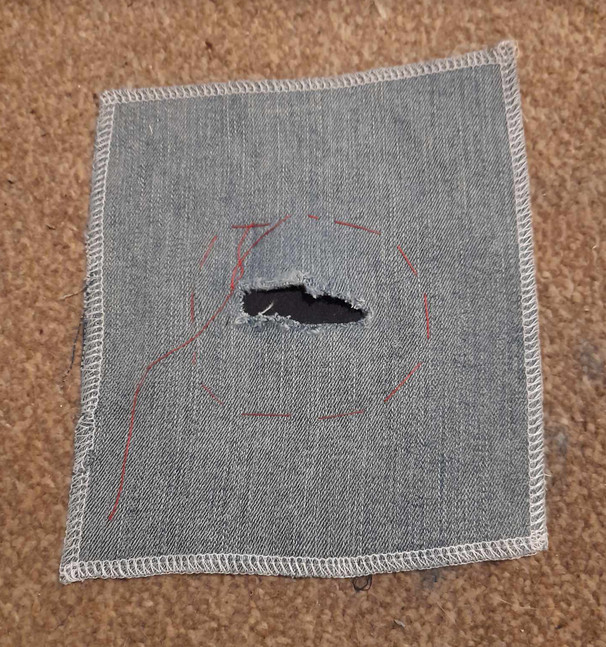
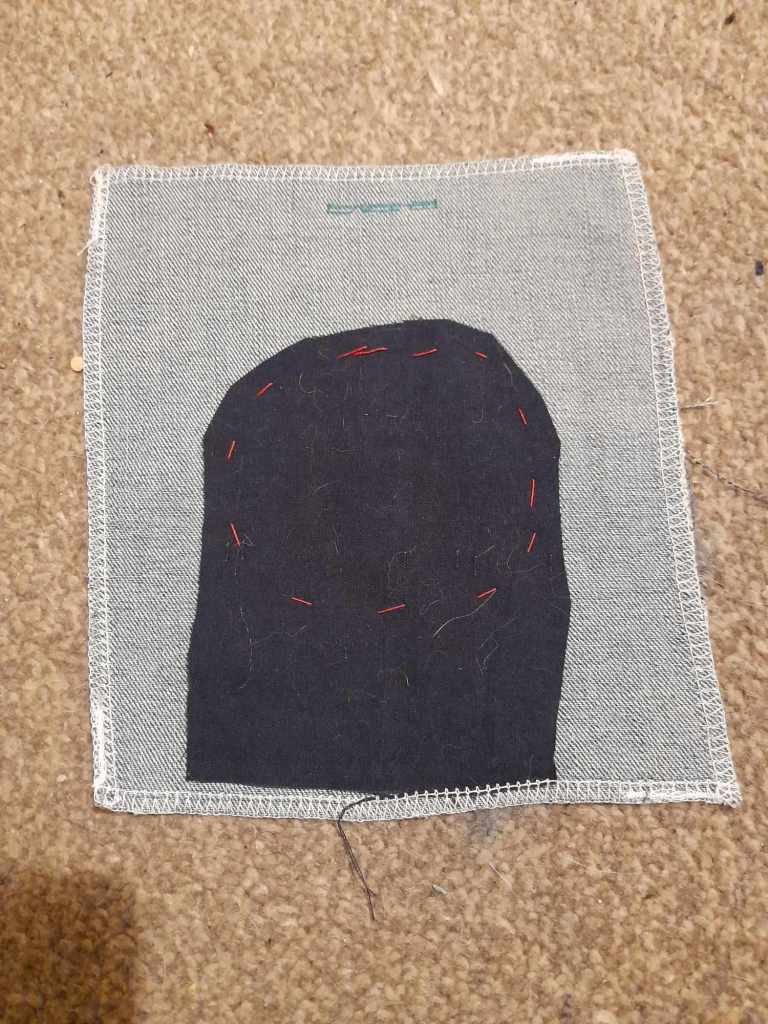
I know it feels like a faff but do the tacking stitches. You can thank me later!
Wrangle the jeans around to get the crotch under your sewing machine, and sew over the patch in a really big zig-zag, so you’re going right over the patch and off the edge and into the good fabric. Do extra stitching where the hole is, so the frayed edges are well fastened down and the weakest fabric is the best secured. (For clarity – set your machine to do a straight stitch, but go to and fro over the fabric, so you make a zigzag pattern with the stitches. Make liberal use of the button that makes your machine stitch backwards, rather than trying to swivel the fabric around each time your change direction)
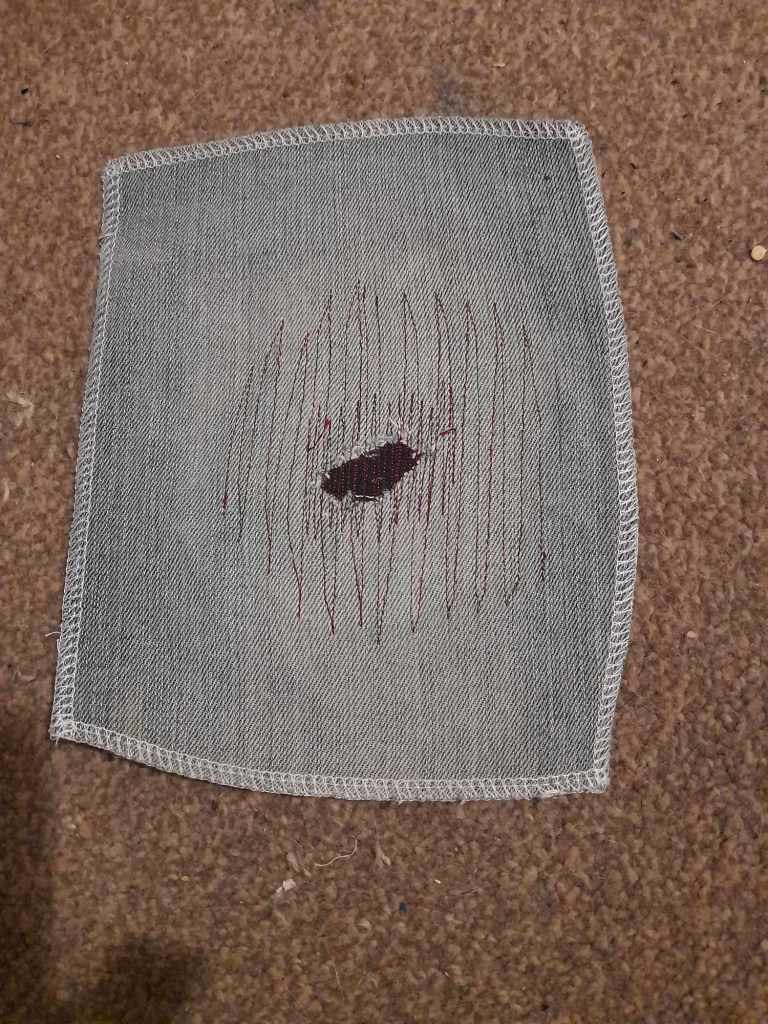
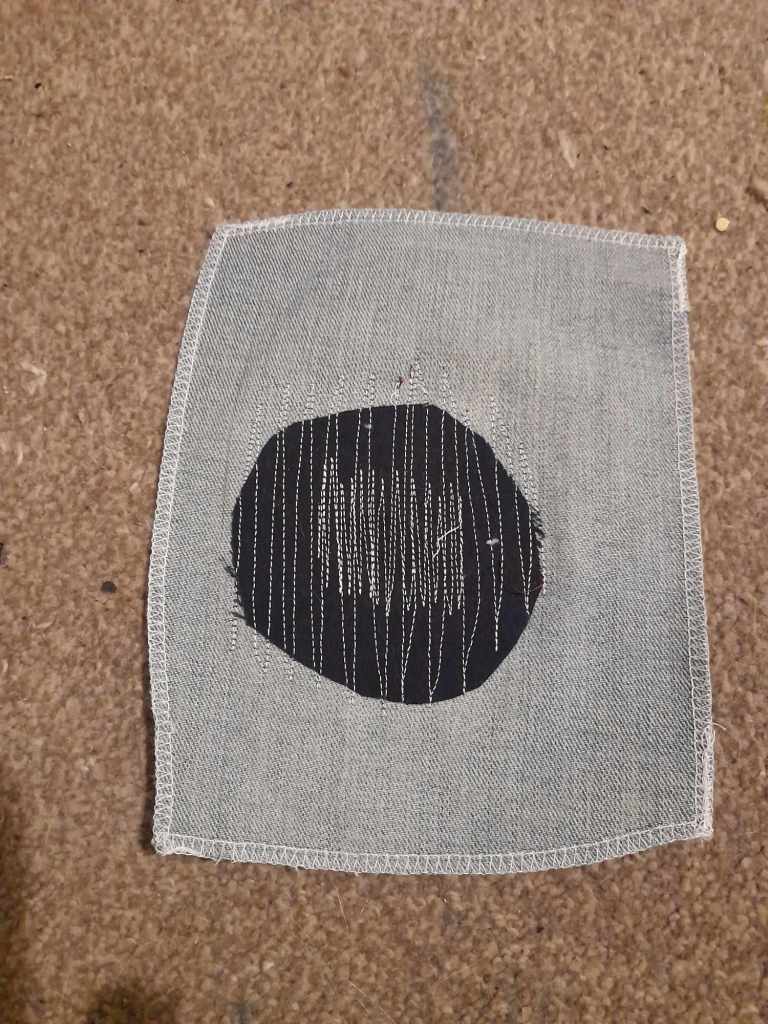
Once it’s sewn down, you can cut the tacking stitches off with a little pair of scissors, or a stitch ripper. You’ve probably sewn over them, in several places, so give them a bit of a pull. They’ll come away.
You can stitch fairly randomly over the hole and patch, in all directions, if you want to. The reason I use a zigzag is so that I can line the direction of the stitches up with the grain of the fabric. That way, they almost disappear into it, which makes it extra hidden, like this sample, where I’ve not used the contrasting colours. Because of the way denim is woven, there’s a straight up and down grain and a diagonal one. You can line your stitches up with either, depending on how it sits best under your machine.
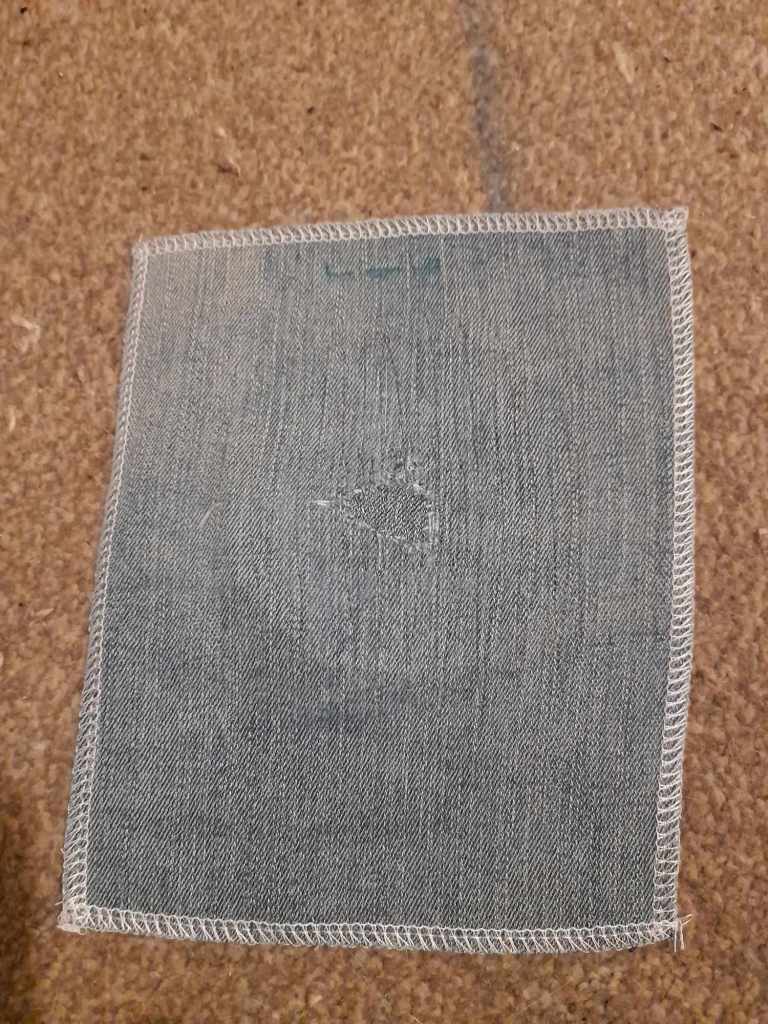
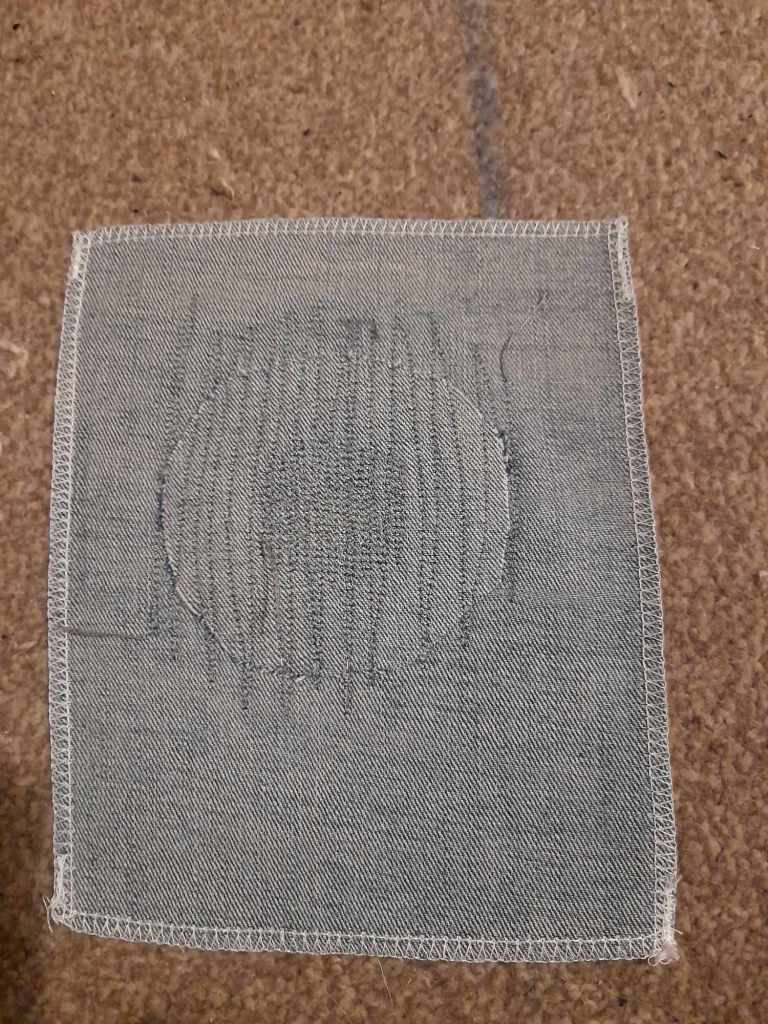
The other reason for using a big zigzag is for stretch denim. If you have stretchy jeans, they will get holes in quicker, unfortunately. They need to be mended in a stretchy way, or the patch will pull against the jeans when you wear them and cause more damage than it solves.
If you use stretchy fabric for the patch and use big zigzags to sew it on, the patch and the stitching will stretch with the fabric. You need to pay attention to direction, though. Jeans stretch across the width of your leg, so the zigzag needs to go that way too. I felt like a flipping genius, the first time I managed a stretchy mend!
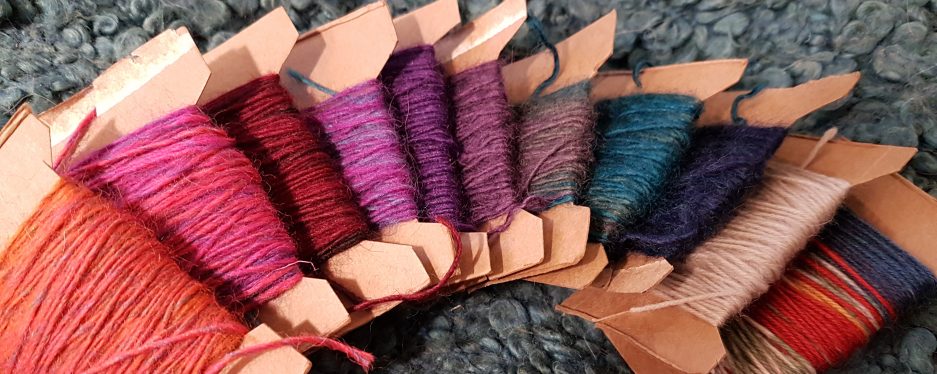
Other useful things to know: What colour thread should you use, if you want an invisible mend? You don’t need lots of shades of blue, to get a good match. And a slightly wrong shade of blue can be more obvious than you’d hope. Get a few different shades of grey. It blends right in, if you get a close tone. If you have to choose between slightly too dark grey or slightly too light grey, go with the darker. It blends in better.
The place you mended will wear again, because you’re still rubbing away at the fabric in the same way when you move in them, but this will give you a substantial amount of extra life to them. If you love them a lot, mends on top of mends can definitely work. It depends on just how much you love them.
If you haven’t got a sewing machine, you can do all of this by hand. It will take longer, and you probably won’t stitch it so thoroughly, so it might not last as long. But it will still work, and will still get the jeans wearable again.
Seams: The hole is quite likely to be close to the leg seam of your jeans. It’s up to you if you want to sew over the seam or not. It’s a good strong place to anchor your patch to, but it’s a thick wodge of fabric to sew through. My machine will do it ok, if I go really slowly, but I’ve heard of other people who broke needles trying to do that. Up to you if you want to give it a go or not!
I’ve talked about crotch mends, because it’s a common one, and it’s a place where people want something subtle, but this will work just fine elsewhere on your jeans, and on other types of clothing too, where the fabric has got thin from friction.
The old saying is true, in this case. A stitch in time really does save nine. If you patch something just before it wears through, rather than several months after it happens, it’s much easier to do and the result is much neater.
This is most of what I’ve learnt from patching many pairs of jeans. I love talking about this stuff, so if you’ve got questions, feel very welcome to ask me them!

 Ragbag Mending